
Fujifilm GFX 50S Camera Launched in India: Price, Specifications
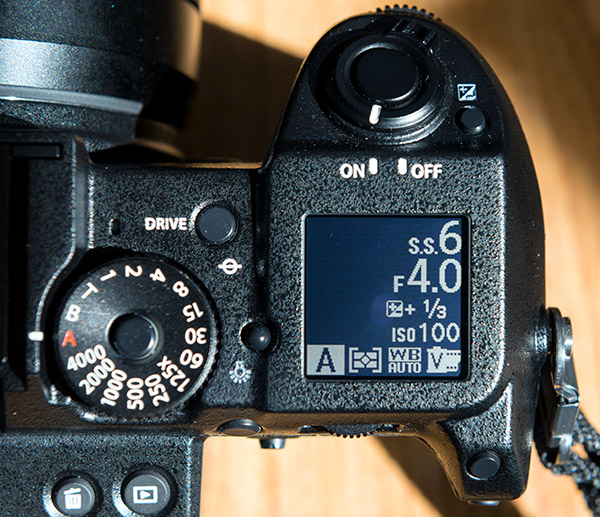
Fujifilm announced that it was working on a brand new medium format camera series back in September 2016, and globally unveiled it last January. Today, Fujifilm India has launched the GFX 50S in India at a price of Rs. 5,11,999 for just the body. The company is also making available a range of GF lenses which includes the GF23mmF4 R LM WR (Rs. 2,04,999); GF45mmF 2.8R WR (Rs. 1,33,999); GF63mmF2.8 R WR (Rs. 1,19,999), GF110mmF2 R LM WR (Rs. 2,19,999); GF120mmF4 R LM OIS WR Macro (Rs. 2,09,999); GF250mmF4 R LM OIS WR (Rs. 3,53,999) and GF32-64mmF4 R LM WR (Rs. 1,79,999).

Performance: The GFX is certainly not designed for speed
The Fujifilm GFX 50S delivers mixed performance in other areas as well. Power on to first shot is a fairly sluggish 1.3 seconds, for example, which is okay when compared to most mirrorless cameras and actually a bit faster than the Pentax 645Z, but much slower than most DSLRs. And switching from Play to Record mode and taking a shot is no faster.
When looking at single-shot shooting performance, the Fuji GFX has cycle times of a second, which is a bit slow compared to most interchangeable lens cameras.
The camera tops out at around 3 frames per second in continuous mode though its buffer when shooting best quality JPEGs was 40 frames and buffer depth when shooting lossless compressed RAW images was 21 frames, which is pretty good considering the resolution. In real-world use, the speeds were sufficient for subjects such as landscapes, portraits and certainly still life, but are obviously not going to cut it for sports or perhaps even quick-paced events, such as weddings. On the plus side, thanks to its UHS-II support, the GFX can clear its buffer quite quickly with a fast card, ranging from 2 to 8 seconds depending on the file recording settings.
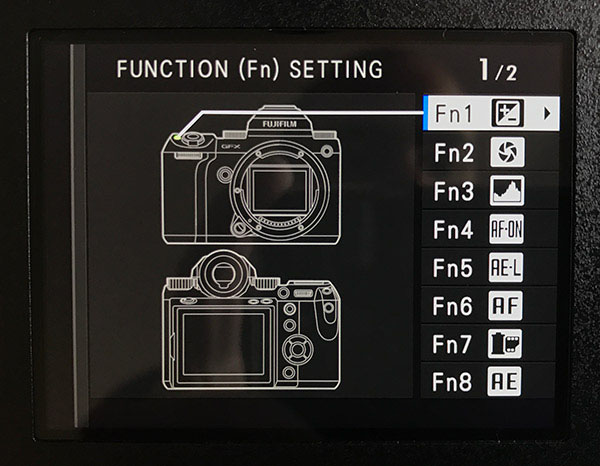
Battery life is rated for 400 shots, which is decent for a large sensor mirrorless camera, but does mean that you may want a second battery -- and perhaps even the optional vertical battery grip, despite its high price point.
Overall, the Fujifilm GFX 50S is not a fast camera. There are not many cameras to compare it to that are equivalent, but nonetheless, when compared to modern full-frame DSLRs and mirrorless cameras, the GFX 50S is a slow camera.
The Fujifilm GFX 50S features a new 51.4-megapixel medium format sensor which can be adapted to different aspect ratios, just like its film cameras. The sensor is developed in-house by Fujifilm and measures 43.8x32.9mm, which is about 1.7 times larger compared to the typical 36x24mm sensor found on most full-frame cameras like the Canon EOS 5D Mark IV and the Sony A7 III.
During the presentation, Toshi Iida, General Manager for the Imaging Product Division at Fujifilm, said that the company has no plans of getting into the full-frame camera market since a medium format camera system offers much better performance. Fujifilm currently has its X-series of APS-C format cameras, which are targeted at general usage, sports, wildlife and other shooting needs. The GFX 50S and others that will follow in this series is specifically targeted at professionals for commercial use.
Features
51.4MP medium format CMOS sensor (43.8 × 32.9mm) with Bayer filter array
3.69M-dot OLED Removable EVF
3.2" 2.36M-dot touch LCD tilts horizontally and vertically
AF-point-selection joystick
Weather-sealing
Film Simulation modes
1/125 sec flash sync speed
3 fps continuous shooting
1080/30p video capture
In-camera Raw processing
Dual SD card slots (UHS-II)
USB 3.0 socket
Wi-Fi

Review Summary
The Fujifilm GFX 50S is not the perfect camera, although it may be a nearly perfect tool for some photographers depending on what they want to do with the camera. Its image quality is excellent and the camera itself is well-built and functional, lending itself well to landscape and nature photography. It also includes some nice portrait-oriented features that make the camera an intriguing option for portrait photographers and perhaps even wedding photographers. On the other hand, the camera is not fast in terms of autofocus or continuous shooting speeds, meaning it is not the right camera for photographing fast-moving subjects or sports. Further, its sensor size will limit the optical options for longer lenses (the longest available native lens is 120mm (95mm equivalent)) which in turns limits the use of the GFX for wildlife photography, even slower-paced wildlife shooting.


0 Comments