
Qualcomm’s new Snapdragon 850 processor will arrive in PCs this year
The Snapdragon 850 is now official and later this year you can expect the first computers with it – likely laptops and 2-in-1s. The chip is essentially a beefed-up version of the Snapdragon 845 found in phones and comes to replace the 835 chip previously used in Windows-on-ARM devices.

The Snapdragon 850, which Qualcomm says will only be used in PCs and will not make its way to phones, is essentially a customized version of the Snapdragon 845 that debuted in phones earlier this year. The improvements that it brings to the Always Connected PC platform are in line with that: it has a claimed 30 percent performance improvement, 20 percent better battery life, and 20 percent faster peak gigabit data speeds over the Snapdragon 835. The Snapdragon 850 is built on the same second-generation 10nm process as the 845, and it’s paired with the same X20 modem for cellular connectivity. Qualcomm says the 850 includes both hardware and software tuning to make it better at performing PC activities compared to the Snapdragon 845.
Though the first Always Connected PCs with the Snapdragon 835 processor just hit shelves this past spring, Qualcomm says that its PC partners will have devices with the 850 out in time for the holiday season this year. The company says it will have more partners than before and the platform will appear in a to be announced device from Samsung. The Snapdragon 835 platform was seen on devices from Asus, HP, and Lenovo.
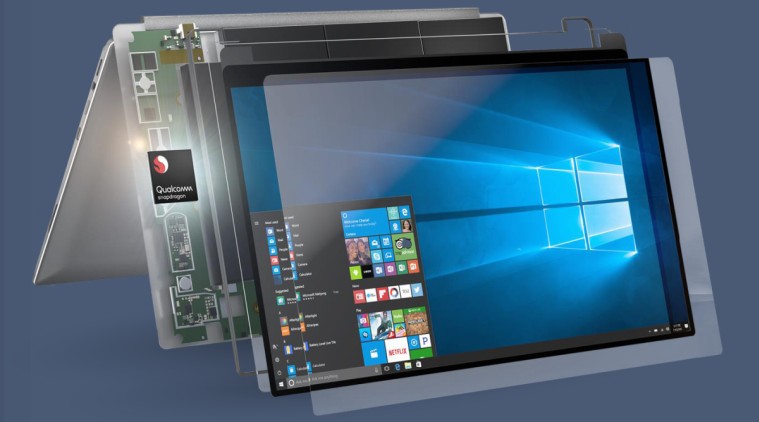
Compared to the Snapdragon 835 laptops, the new chipset promises a 30% boost in performance and 20% better battery life. The upcoming devices should have “multi-day” battery life. The X20 LTE modem pushes the downlink speeds up to 1.2 Gbps.
Microsoft recently updated ARM Windows with 64-bit Edge. Also, overall performance should be up and power use down with the most recent update. HDR is also supported and Qualcomm chips have native support for aptX HD audio


0 Comments